
Lancet Study: U.S. Economic Sanctions Kill 500,000 People Per Year.
A New Lancet Study Found That U.S. Economic Sanctions Kill Half A Million People Every Year.

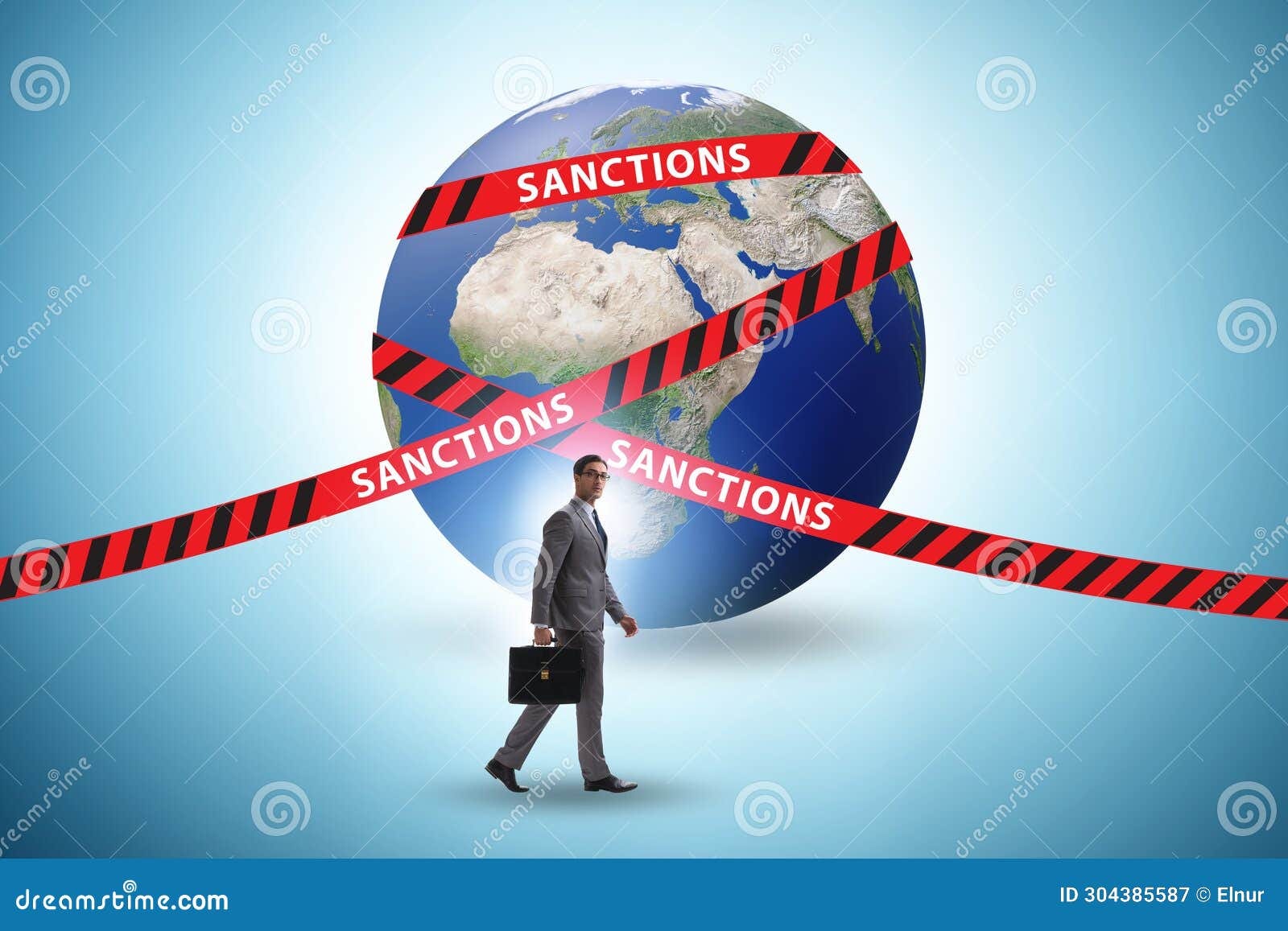
Sanctions Kill 500,000 People Per Year.
Economic sanctions are often presented as a diplomatic alternative to war, which only has an effect on government officials of the targeted country.
In reality, this is far from the truth. Sanctions are a form of economic warfare designed to block all trade to enemy countries, with the intended result of destroying the healthcare system, food supply, and economy.
The Idea behind sanctions is that the United States puts a population in misery in hopes it will cause them to overthrow the government in the targeted country.
This is best underscored by a new study in the British Lancet medical journal from the economists Francisco Rodríguez, Silvio Rendón, and Mark Weisbrot, which found that “unilateral sanctions were associated with an annual toll of 564 258 deaths,” which they write is “similar to the global mortality burden associated with armed conflict”.
They note that “Sanctions have substantial adverse effects on public health, with a death toll similar to that of wars.”
The study concludes by writing, “Woodrow Wilson referred to sanctions as ‘something more tremendous than war’. Our evidence suggests that he was right. Over the past decade, we estimate that unilateral sanctions caused around 560,000 annual deaths worldwide. It is hard to think of other policy interventions with such adverse effects on human life that continue to be pervasively used.”
Summarizing the study, one of its authors, Mark Weisbrot, wrote in the LA Times, “Broad economic sanctions, most of which are imposed by the U.S. government, kill hundreds of thousands of innocent people each year — disproportionately children. This week, the Lancet Global Health journal published an article that estimated that number at about 564,000 annually over a decade. This is comparable to the annual deaths around the world from armed conflict.”
He wrote, “Sanctions are becoming the preferred weapon of the United States and some allies — not because they are less destructive than military action, but more likely because the toll is less visible. They can devastate food systems and hospitals and silently kill people without the gruesome videos of body parts in tent camps and cafes bombed from the air. They offer policymakers something that can deliver the deadly impact of war, even against civilians, without the political cost.”
Describing the impact of economic sanctions, he wrote, “The sanctions can block access to essential imports such as medicine and food and the necessary infrastructure and spare parts to maintain drinkable water, including electrical systems.”
The Sadism Of Sanctions.
Indeed, the United States has used economic sanctions to inflict mass suffering on the people of its official enemy countries.
In the 1990s, when Bill Clinton’s secretary of state Madeleine Albright was asked on 60 Minutes about reports that 500,000 children died as a result of sanctions on Iraq, she replied, “I think this is a very hard choice, but we think the price is worth it”.
Richard Nephew, who worked as deputy coordinator of sanctions policy for Obama’s State Department, bragged in his book, “The Art Of Sanctions,” that U.S. sanctions on Iran made “medicine and medical devices unavailable”, “because they cost too much for the average Iranian”.
He also bragged that “Iranian unemployment and inflation remained in the double digits” and that “Iran’s currency depreciated threefold in a matter of weeks” as a result of U.S. sanctions.
He bragged that intentionally keeping the Iranian population in misery made it easier to run regime change propaganda operations in the country, writing, “All the while, the United States expanded the ability of U.S. and foreign companies to sell Iranians technology used for personal communication, helping ensure that the Iranian public had the ability to learn more about the dire straits of their country’s economy”.
In other words, he bragged about destroying the Iranian economy and then running propaganda operations highlighting the “dire straits” of the Iranian economy, hoping it would lead to regime change.
Similarly, under the first Trump administration, his Secretary of State Mike Pompeo said, “Things are much worse for the Iranian people [with the US sanctions], and we are convinced that will lead the Iranian people to rise up and change the behavior of the regime”.
In 2020, the United States imposed starvation sanctions on Syria, which the Pentagon official Dana Stroul bragged were intended to “prevent reconstruction aid and technical expertise from going back into Syria” and ensure that the country “is rubble”.
Reporting on the sanctions from the ground in Syria, in 2023, journalist Charles Glass wrote, “Damascus reminded me of Baghdad on my many trips there between the war over Kuwait in 1991 and the American invasion in 2003. In those years, the US, the EU, and the UN were enforcing similar restrictions based on their conviction that economic hardship would destabilize Saddam Hussein’s regime or compel a hungry populace to depose him. In Iraq, then, as in Syria now, the regime flourished and people starved”.
After the American regime change goal was achieved in Syria in 2024, the Washington Post admitted that, “American and European Union sanctions aimed at punishing the regime of President Bashar al-Assad have weakened the medical system that millions of Syrians rely on — preventing hospitals from maintaining or importing lifesaving diagnostic machines and making it more difficult to provide timely treatment to the wounded and the sick.”
After the U.S. withdrawal from Afghanistan, they placed sanctions on the country, which Foreign Policy Magazine said caused “around half of Afghanistan’s 40.2 million people” to be at “crisis or emergency levels of food security.”
Writing about the effect of the sanctions in 2022, The Intercept wrote, “Children are already bearing the brunt of the humanitarian catastrophe, punctuated by horrifying stories of kids being sold to pay for food. And the country’s notoriously harsh winter is already taking a toll: Afghans are freezing to death as they flee the country with their families.”
In Venezuela, the United States has imposed harsher and harsher sanctions as part of its long-term attempt to overthrow the governments led by Hugo Chávez and then Nicolás Maduro.
From 2017 to 2019, the U.S. sanctions on Venezuela caused 40,000 deaths. Overall, the sanctions have caused over 100,000 deaths.
The United States also imposed similar sanctions on Nicaragua after pouring 4.1 million dollars from 2014 to 2018 in propaganda operations attempting to incite a coup against the country’s Sandinista government.
These are just some examples of the effect of sadistic U.S. sanctions. As Mark Weisbrot noted, “The biggest advantage of sanctions, for the policymakers who use them, is the invisibility of their toll. But that is also their Achilles’ heel. When the economic violence of broad sanctions becomes widely known, they will be indefensible and no longer politically sustainable”.
Note to readers: The Dissident is a reader-supported outlet. If you liked this article, consider becoming a paid subscriber.
Wait, I thought they “hate us because of our freedom” Isn’t that what we’re sold?
Not because we strangle their economies, starve their children, and fund endless proxy wars all over the globe.
No, it’s the freedom we have to work three jobs and still be broke, go bankrupt from a hospital bill, get shot at the mall, and graduate with a mountain of student debt just to pour coffee for tips
Thank you for writing about this.
We've been screaming since 2010, but apparently our suffering is only valid when it's about a headscarf, not cytostatic, insulin, dialysis fluid or contrast dye shortage.
Also... the cynicism of "humanitarian exemptions" is so sickening it makes you furious. There are no exceptions if nobody will facilitate the bank transfers. For fear of retribution.
Again, thanks for writing.