

Written By: Justin K.P.
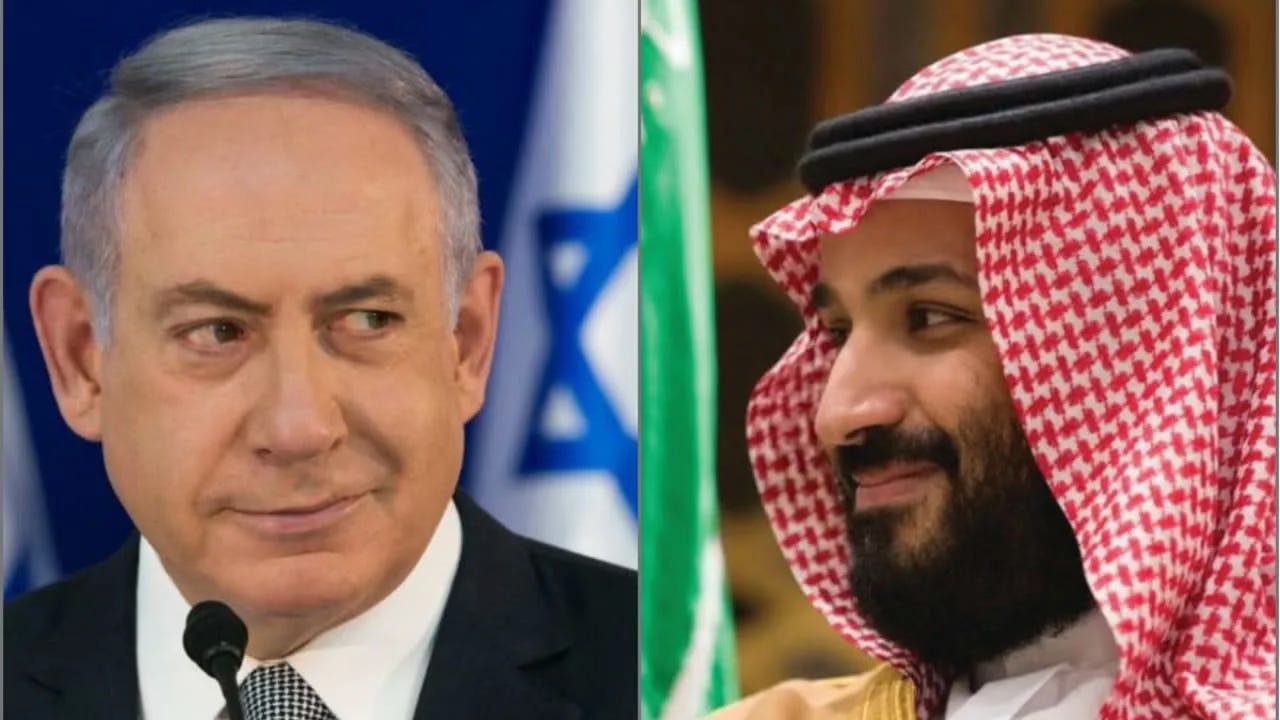
After Yemen’s Ansar Allah made major advances against Saudi Arabia’s proxies in Yemen, following Saudi Arabia’s violation of the 2022 ceasefire in June, when it attacked the Sanaa airport, Israel and Saudi Arabia have been creating a closer alliance in their respective wars against Yemen.
The Saudi ceasefire violation and Ansar Allah’s successful response, followed the U.S. backed genocidal war Saudi Arabia unleashed in Yemen from 2015-2022, which killed 377,000 people when including indirect deaths, and included a barbaric blockade that caused the worst outbreak of cholera in modern times and put millions into famine-like conditions.
Israel, similarly, is opposed to Ansar Allah due to the resistance movement’s place in the Axis of Resistance, and because the movement stood up for Palestinians facing Israeli genocide in Gaza by putting a blockade on Israeli-linked ships in the Red Sea in an attempt to get Israel and the U.S. to end the genocide.
As Ansar Allah continued to make major advances against Saudi Arabia and its proxies in Yemen, Saudi Arabia and Israel have begun to form a closer alliance.
Reportedly, “Israel and Saudi Arabia held talks mediated by US Central Command”, where Saudi Arabia requested “intelligence support to build a broader picture of Houthi military deployments in the area and identify potential plans for future operations” from Israel.
Ynet similarly reported that “Israel is said to already be providing Saudi Arabia with intelligence assistance amid the escalation with Yemen’s Houthis, diplomatic sources in the region said Tuesday. According to the sources, the assistance is being transferred to Riyadh through the U.S. military’s Central Command (CENTCOM) and does not involve operational support or direct Israeli participation in the fighting.”
However, cracks are already forming in this pro-genocide alliance.
Primarily, this surrounds the possibility of the U.S. selling up to 48 F-35 warplanes to Saudi Arabia to back its war on Yemen, which was recently approved by the US State Department.
Despite the alliance with Saudi Arabia in Yemen, this possibility is angering the Zionists, who fear not being the only regional power to possess F-35s.
Zionist media outlets, such as the Miriam Adelson-owned “Israel Hayom,” complained that “The move could end Israel’s regional exclusivity as the only country in the Middle East currently operating the F-35”, while Ynet reported the deal has “drawn scrutiny in Israel” because of “Israeli concerns over qualitative military edge”.
Furthermore, Saudi Arabia- at least officially- is not agreeing to give in to every Israeli demand, such as joining the Abraham Accords, the Israeli deal that sought to have Arab states normalize with Israel without any concessions for Palestine, therefore preventing a Palestinian state and sidelining Palestine in the region.
Since the genocide in Gaza, Saudi Arabia has officially refused to normalize with Israel without the recognition of a Palestinian state.
Given how unpopular full normalization with Israel would be, Saudi Arabia appears to be continuing this demand, with the Times of Israel quoting a Saudi source saying, “The assumption that… Riyadh will be flexible on the matter of normalization with Jerusalem is mistaken”.
Israel’s obsession with being the most powerful regional hegemony, and getting Arab states to completely abandon Palestine and the prospect of Palestinian sovereignty, will likely be the death of the Israeli/Saudi alliance in Yemen, and potentially even the U.S. sales of F-35s to Saudi Arabia, giving another boost to Ansar Allah.
Note to readers: The Dissident is a reader-supported outlet. If you liked this article, consider becoming a paid subscriber.
The zionists' only concern about Saudi F-35s would be in the event of the overthrow of the monarchical dictatorship, the new government would use them against Israel.
I can remember when cynical US media wrung its hands over golfers taking money from Saudi Arabia but now when US wants to sell 45 F35s to the same regime? Utter silence. No one should believe US mainstream media in any circumstance.